
Microchip PIC24FJ256GA705-I/PT: A Comprehensive Overview of Its 16-bit Architecture and Embedded Applications
The Microchip PIC24FJ256GA705-I/PT stands as a prominent member of the PIC24F family, representing a powerful and versatile 16-bit microcontroller engineered for a broad spectrum of embedded applications. Its architecture strikes a critical balance between processing performance, power efficiency, and peripheral integration, making it a preferred choice for developers tackling complex design challenges.
At the heart of this device lies its high-performance 16-bit CPU core. Operating at up to 16 MIPS (Million Instructions Per Second) with a 32 MHz clock, it delivers a significant computational boost over traditional 8-bit MCUs. This core features a 24-bit instruction word and a 16-bit data path, enabling single-cycle execution of many arithmetic and logic operations. A key architectural advantage is its modified Harvard architecture, which allows for concurrent access of program and data memory, significantly enhancing throughput. Furthermore, it includes a 17 x 17 hardware multiplier and a 32/16-bit hardware divider, accelerating mathematical computations crucial for digital signal processing and control algorithms.
Memory resources are ample for mid-range embedded systems. The device boasts 256 KB of self-programmable Flash memory for storing application code and non-volatile data, alongside 16 KB of RAM for efficient data manipulation during runtime. This combination supports complex operating systems and data-intensive tasks.
A defining characteristic of the PIC24FJ256GA705-I/PT is its rich set of integrated peripherals, which minimizes external component count and reduces total system cost. Notable features include:
High-Speed Connectivity: Multiple serial communication interfaces like UART, SPI, and I²C are present. Crucially, it includes two UART modules with hardware flow control and dual I²C modules supporting SMBus and PMBus protocols, facilitating robust communication with sensors, displays, and other ICs.
Analog Capabilities: A sophisticated 12-bit Analog-to-Digital Converter (ADC) with up to 24 channels and a sampling rate of 200 ksps allows for precise acquisition of real-world signals. It also features three analog comparators for quick threshold detection.
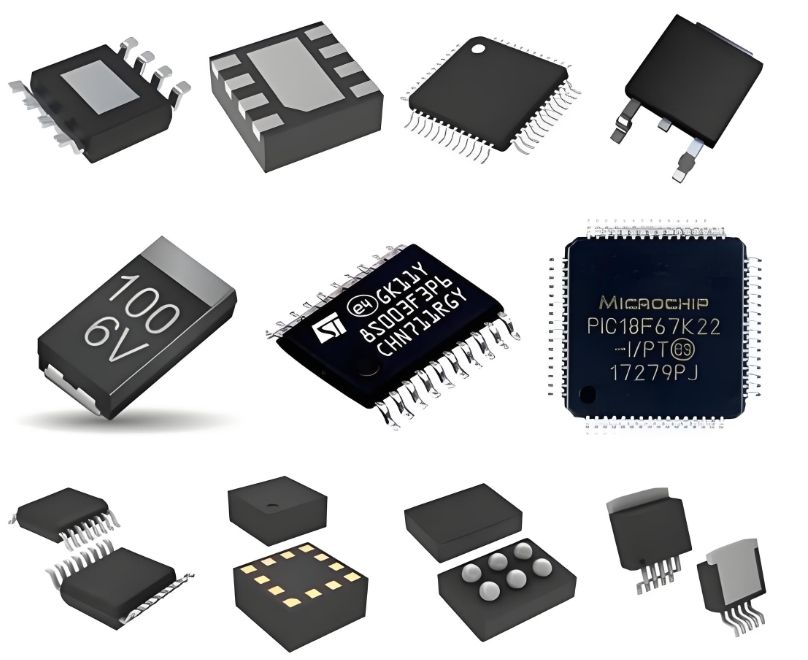
Timing and Control: The microcontroller is equipped with multiple 16-bit timers/counters, a Real-Time Clock and Calendar (RTCC), and five 16-bit PWM (Pulse Width Modulation) outputs. These are essential for generating precise waveforms for motor control, power conversion, and creating periodic interrupts.
Hardware Security: To protect intellectual property, the device offers programmable code protection, preventing unauthorized reading of the firmware.
The combination of its robust processing power and extensive peripheral set makes the PIC24FJ256GA705-I/PT exceptionally well-suited for a wide array of applications. It is particularly dominant in:
Industrial Control Systems: Used in PLCs, sensor hubs, and industrial networking modules due to its communication interfaces, reliability, and real-time control capabilities.
Medical Devices: Powers portable diagnostic equipment, patient monitors, and infusion pumps where precise analog measurements and dependable operation are paramount.
Consumer Electronics: Drives advanced human-machine interfaces (HMI), home automation controllers, and gaming accessories.
Automotive and IoT: Employed in automotive sensor interfaces, telematics, and a multitude of Internet of Things (IoT) edge nodes, benefiting from its low-power operational modes and connectivity options.
ICGOOODFIND: The Microchip PIC24FJ256GA705-I/PT is a highly capable 16-bit microcontroller that excels through its balanced high-performance core and a comprehensive suite of integrated peripherals. Its architecture is meticulously designed for developers requiring more power than 8-bit platforms can offer without the full complexity of 32-bit systems, making it an optimal solution for sophisticated industrial, medical, and consumer embedded applications.
Keywords: 16-bit Microcontroller, PIC24F Architecture, Embedded Applications, Integrated Peripherals, MIPS.

